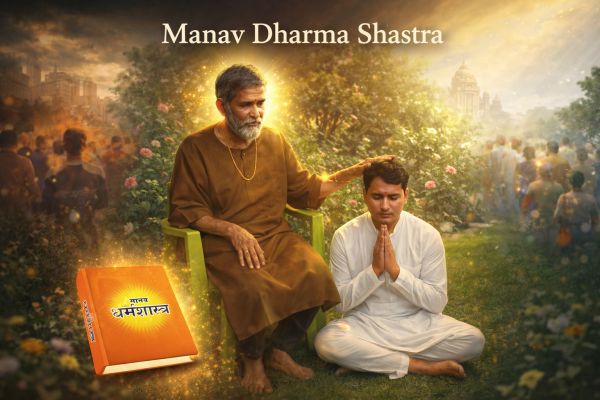
Manav Dharma Shastra Pratham Skandh: A Divine Guide to Restoring Social Order and Inner Peace
Posted By: Awadhoot Devidas Seva Sansthan
31 Mar 2026
Manav Dharma Shastra Pratham Skandh: A Divine Guide to Restoring Social Order and Inner Peace
Discover the profound teachings of the Pratham Skandh in Manav Dharma Shastra by Gurudev Awadhoot Laxminarayan Ji. Explore insights on social reform, Raj Dharma, and spiritual awakening.
What is manav dharma-shastra?
The Pratham Skandh (First Section) of the Manav Dharma Shastra serves as the foundational pillar of this sacred scripture. Composed by Gurudev Awadhoot Laxminarayan Ji under the divine grace of Satguru Awadhoot Devidas Maharaj, this section is not merely a collection of verses; it is a heartfelt dialogue between a humble devotee and the Supreme Creator.
It addresses the most pressing issues of the modern world—political corruption, social disintegration, and moral decay—while offering a spiritual roadmap for restoring righteousness (Dharma).
Here is an in-depth look at the key themes and spiritual wisdom found in the Pratham Skandh.
1. The Humble Invocation: Seeking Divine Shelter
The Pratham Skandh begins with a powerful invocation (Stuti) where the author surrenders completely to the Divine. Unlike traditional texts that boast of knowledge, this section starts with profound humility. The author admits to ignorance, selfishness, and a lack of devotion, asking the Almighty for forgiveness and guidance.
"O God! You are so kind and compassionate to the poor, please take me in your shelter. Oh God! I don’t have anyone except you to look up to..."
This opening sets the tone for the entire book: that true wisdom begins with the realization of one's own smallness before the vastness of the Paramatma (Supreme Spirit).
2. The Vision of an Inclusive Society
One of the most striking aspects of the Pratham Skandh is its universal approach. The author prays to the Divine to compose a scripture that does not discriminate based on caste, creed, or religion.
"Jati Panth Nahi Hovhi Bheda | Parhi Sunhi Mitawahi Kheda ||" (Let there be no discrimination of caste or sect. May reading and listening to this remove all sufferings.)
In a world rife with division, the Pratham Skandh positions Manav Dharma Shastra as a bridge for social harmony, aiming to unite the human race under the umbrella of "Akhand Mahapanth" (Unified Cult).
3. A Mirror to Modern Society: Critique of Governance and Family
The Pratham Skandh acts as a mirror, reflecting the harsh realities of contemporary society. It does not shy away from criticizing the current state of politics and family life. The text highlights:
• Corruption in Democracy: It describes how democracy can turn into a tool of exploitation (Lok Shahi Banae Soshan Yantral), where leaders focus on self-interest rather than public welfare.
• The Collapse of Family Values: The verses mourn the increasing discord between husbands and wives, the neglect of parents, and the rise of selfishness in domestic life.
• Economic Inequality: It points out the painful gap between the rich and the poor, where food is hoarded while the hungry starve.
By articulating these problems so clearly, the scripture validates the struggles of the common man and sets the stage for the divine solutions that follow.
4. The Concept of Raj Dharma (Righteous Governance)
A central theme of the Pratham Skandh is the introduction of Raj Dharma (Royal Doctrine). The author expresses a deep desire to write the secrets of religion that lead to enlightenment for both the ruler and the ruled.
"Raja Praja Ubhay Hith Karau ||" (May both the King and the People benefit.)
The text suggests that without good governance, society cannot progress, and without social reform, governance is meaningless. It proposes that the ultimate purpose of a leader should be the "welfare of mankind," establishing a system based on truth, non-violence, and compassion.
5. Questions to the Divine
The Pratham Skandh concludes by posing fundamental questions to the Creator about the origin of the universe, the creation of language, the rise of ignorance, and the breakdown of the original divine system. These questions pave the way for the answers provided in the subsequent sections (Skandhs) of the book.
Why Read the Pratham Skandh?
Reading the first section of Manav Dharma Shastra is essential for any spiritual seeker because it:
• Purifies the Mind: The humble prayers invoke a sense of surrender and peace.
• Awakens Social Responsibility: It forces the reader to reflect on their role in society and the importance of ethical living.
• Offers Hope: Despite the grim description of societal ills, the Skandh promises that the Divine grace can restore order and happiness.
Conclusion
The Pratham Skandh is more than just an introduction; it is a call to action. It urges humanity to move away from hypocrisy and selfishness toward the path of Sat Dharm (True Religion). Whether you are seeking spiritual solace or looking for answers to the world's chaos, this section provides the foundation for a life guided by divine wisdom.
Who wrote the Manava Dharma Shastra?
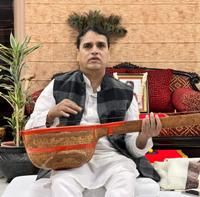
Manav Dharma Shastra is a Sanatan Dharma scripture composed by Gurudev Awadhoot Laxminarayan Ji (Laxminarayan Meena, IPS) under the divine grace of Satguru Awadhoot Devidas Maharaj. This scripture was first published in Hindi in 2013, followed by its English edition in 2022 and Bengali edition in 2023 (Publisher: Kirti Publication; ISBN: 978-81-965006-1-0)
Keywords: Manav Dharma Shastra, Pratham Skandh, Gurudev Awadhoot Laxminarayan, Raj Dharma, Spiritual Wisdom, Social Harmony, Sanatan Dharma, Divine Book.